

Threat Spotlight: Household Pesticides
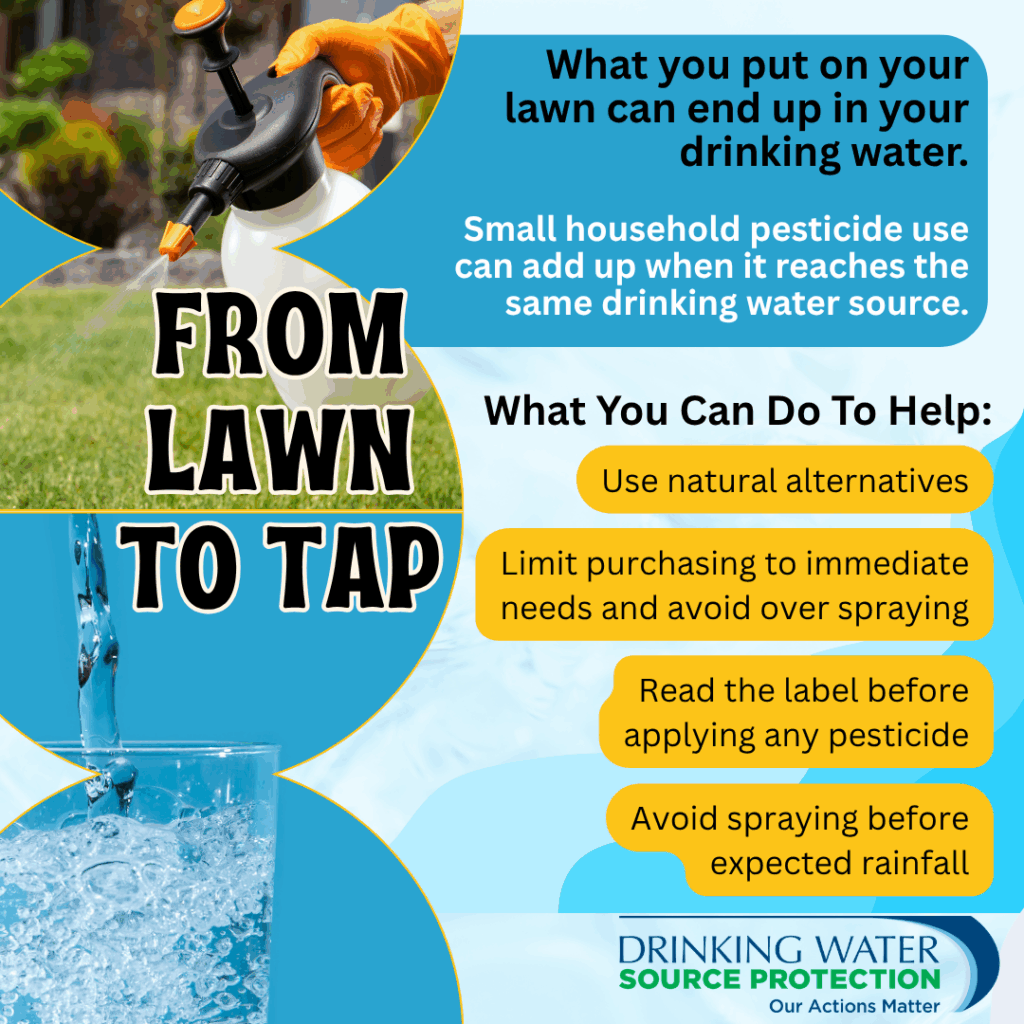
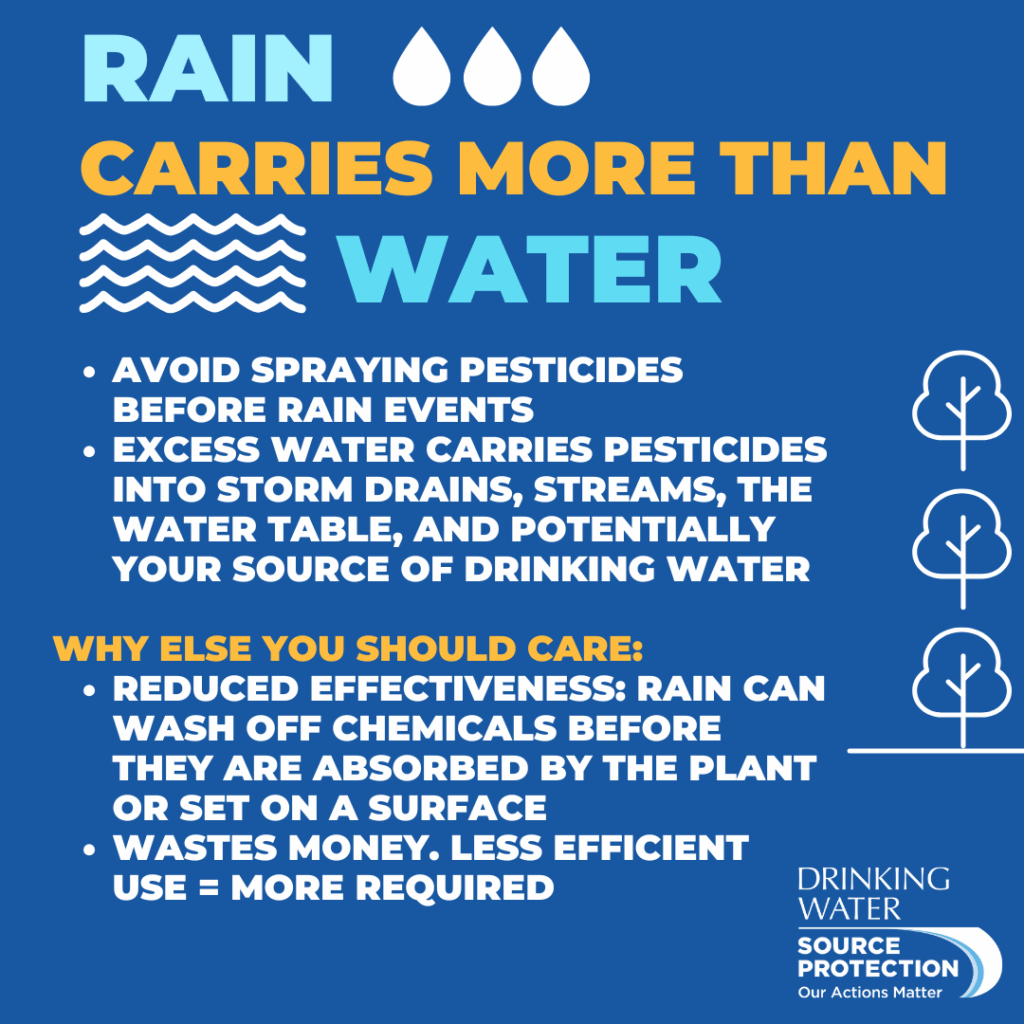
All chemical pesticides are now considered a drinking water threat under the new technical rules. While commercial agricultural pesticide application, handling and storage is often addressed through Risk Management Plans, this isn’t feasible for small quantities of household pesticides. However, even local pesticide use can become a threat to your drinking water as these chemicals can runoff into surface water (lakes/rivers), or seep into the groundwater. The impact of this can compound when multiple households are using them in the same community and these all flow to the same source of drinking water. Additionally, many pesticides aren’t picky about the insects they target and can be harmful to useful pollinators such as bees.
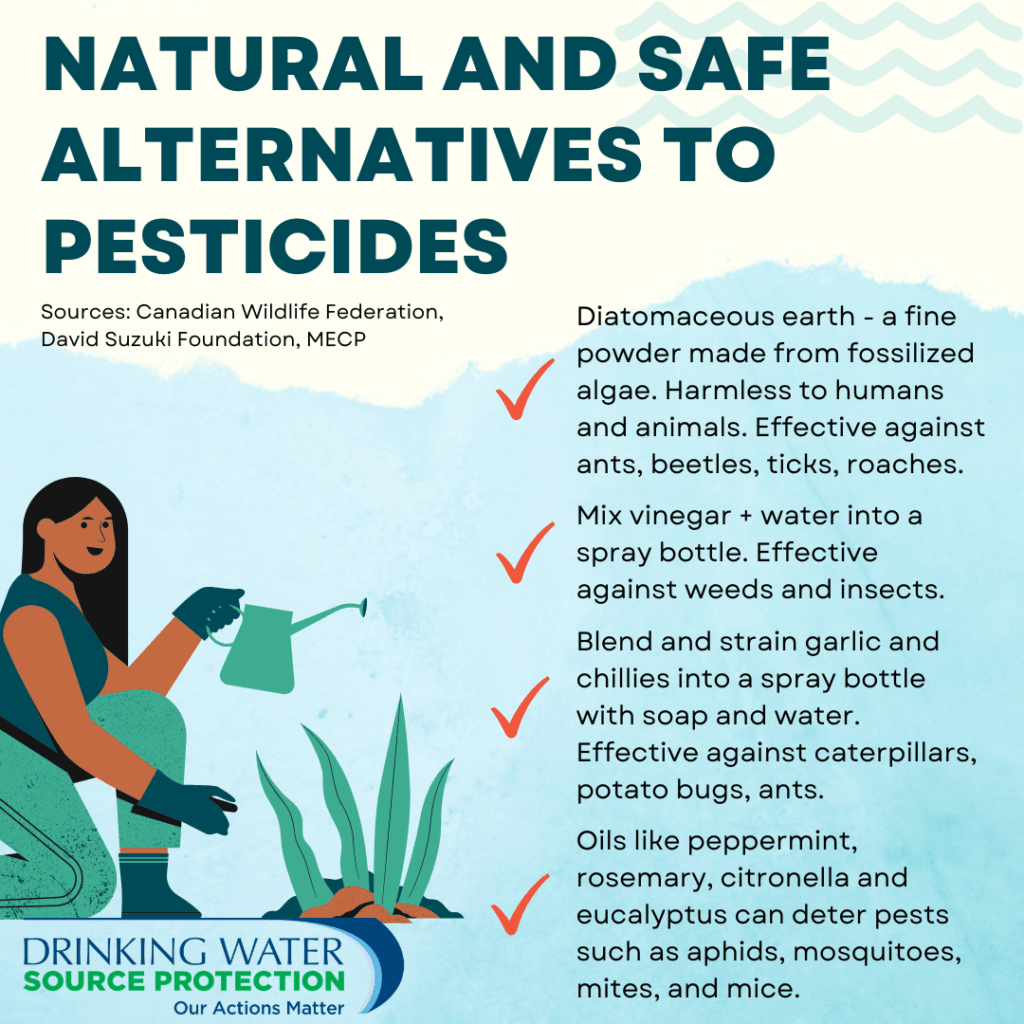
Consider using natural alternatives to pesticides when you can. Check out our fact sheet here for some suggestions and more in the graphic below, and feel free to send your own ideas for natural alternatives to info@trentsourceprotection.on.ca.
Other Things You Can Do:
- Use products immediately and apply them exactly as instructed;
- Purchase only the necessary amount for the job to use products quickly and avoid mixing and storage of larger quantities of concentrated products;
- Look for natural product options and strategies;
- Never discard pesticides down the drain, toilet, sewer, or in the trash;
- Check your municipality’s website for collection information and disposal sites for pesticide remains and containers;
- Do not rinse containers in a household sink and do not pour rinse water down the drain;
- Never re-use or burn a pesticide container.
Threat Fact Sheets
| Agricultural Activities | https://trentsourceprotection.on.ca/wp-content/uploads/2025/08/Agriculture-factsheet-AODA-.pdf |
| Dense NonAqueous Phase Liquids | https://trentsourceprotection.on.ca/wp-content/uploads/2025/08/DNAPLs-factsheet-AODA-.pdf |
| Onsite Sewage Systems | https://trentsourceprotection.on.ca/wp-content/uploads/2025/08/Onsite-Sewage-System-factsheet-AODA-.pdf |
| Pesticides | https://trentsourceprotection.on.ca/wp-content/uploads/2025/08/Pesticide-factsheet-AODA-.pdf |
| Fuel | https://trentsourceprotection.on.ca/wp-content/uploads/2025/08/Fuel-factsheet-AODA.pdf |
| Wellhead Protection Areas (WHPAs) | https://trentsourceprotection.on.ca/wp-content/uploads/2025/08/WHPA-factsheet-AODA-.pdf |
| Intake Protection Zones (IPZs) | https://trentsourceprotection.on.ca/wp-content/uploads/2025/08/IPZ-factsheet-AODA-.pdf |
| Alternatives to Pesticides | https://trentsourceprotection.on.ca/wp-content/uploads/2026/05/pesticide-alternatives-factsheet.pdf |
| Alternatives to Household Hazardous Products | https://trentsourceprotection.on.ca/wp-content/uploads/2026/06/2026-Alternatives-to-Hazardous-Household-Products.pdf |
Under the Clean Water Act, 2006 there are 22 Prescribed drinking water threats.
- The establishment, operation or maintenance of a waste disposal site within the meaning of Part V of the Environmental Protection Act.
- The establishment, operation or maintenance of a system that collects, stores, transmits, treats or disposes of sewage.
- The application of agricultural source material to land.
- The storage of agricultural source material.
- The management of agricultural source material.
- The application of non‐agricultural source material to land.
- The handling and storage of non‐agricultural source material.
- The application of commercial fertilizer to land.
- The handling and storage of commercial fertilizer.
- The application of pesticide to land.
- The handling and storage of pesticide.
- The application of road salt.
- The handling and storage of road salt.
- The storage of snow.
- The handling and storage of fuel.
- The handling and storage of a dense non‐aqueous phase liquid.
- The handling and storage of an organic solvent.
- The management of runoff that contains chemicals used in the de‐icing of aircraft.
- An activity that takes water from an aquifer or a surface water body without returning the water taken to the same aquifer or surface water body.
- An activity that reduces the recharge of an aquifer.
- The use of land as livestock grazing or pasturing land, an outdoor confinement area or a farm‐animal yard.
- The establishment and operation of a liquid hydrocarbon pipeline. O. Reg. 385/08, s. 3; O. Reg. 206/18, s.1.